(From BPS digest, see http://www.researchdigest.org.uk/blog for more info)
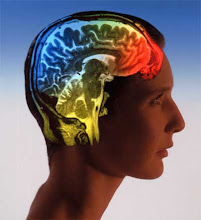
It's not just the amount of sleep we get that is so important for learning, but the quality of that sleep. That's according to a new study that made precise use of beeping noises to disrupt deep "slow-wave" sleep among 13 elderly participants (average age 60 years), without actually waking them up.
The beeping was used in such a way that although the participants' were deprived of deep sleep, their total sleep time and number of sleep stages were unaffected (compared with a comparison night of undisturbed sleep). After a night of either shallow or deep sleep, the participants had their brains scanned while they viewed 50 images of houses and landscapes. The next day they had to say which of 100 images were repeated from the daybefore.
The participants' performance was superior when a night with deep sleep had preceded the learning of the images, compared with a night of shallow sleep, even though total sleep time was the same in each case (36.6images correctly identified versus 31.4 images, on average). Moreover, the brain scans showed that during the initial viewing of images, activity in the hippocampus, the seat of human memory, was reduced aftershallow versus deep sleep, but only for those images that were subsequently recalled....
Van Der Werf et al (2009). Sleep benefits subsequent hippocampal functioning. NatureNeuroscience. In press.
Friday, 23 January 2009


Autism debate
You may have come across the recent research and debate into the causes of autistic spectrum disorders.
See for example this article by Simon Baron-Cohen, a prominent researcher in the field, who famously used the Sally-Anne test to investigate limitations in 'theory of mind' - the ability to attribute thoughts and knowledge to other people - as a possible central trait in autism.
Autism is also prominently featured in the current issue of Psychology Review, if you are interested in reading more.
See for example this article by Simon Baron-Cohen, a prominent researcher in the field, who famously used the Sally-Anne test to investigate limitations in 'theory of mind' - the ability to attribute thoughts and knowledge to other people - as a possible central trait in autism.
Autism is also prominently featured in the current issue of Psychology Review, if you are interested in reading more.
Thursday, 22 January 2009
Broadmoor
I recently read an article on Broadmoor psychiatric hospital, an well-known institution in England which detains people who are viewed to be dangerously metally ill and criminal.

The history of the place is fascinating, as are the cases of some of its inmates. The wikipedia page includes links to some of the many infamous cases, such as the serial killer Robert Maudsley, the assassin Daniel M'Naghten, plus the genius twins who wouldn't speak, June and Jennifer Gibbons. There are many others who you may have heard of from current or older news stories.
It is notable how many of them had very disturbed childhoods, and how many have multiple psychological disorders.
The Titanic & social psychology


Monday, 19 January 2009
Features of a good sample
Another mnemonic...
While teaching one of this year's classes, I noticed that the Marking Instructions (MIs) from 2006 exam paper presented us with a good mnemonic for 'features of a good sample':
The question is: 'State the features of a good sample', and the MIs say:
Is representative of the target population; avoids bias; allows generalisation to the target population.
So we can have:
Generalisable
Representative
Avoids Bias
Or 'GRAB'.
While teaching one of this year's classes, I noticed that the Marking Instructions (MIs) from 2006 exam paper presented us with a good mnemonic for 'features of a good sample':
The question is: 'State the features of a good sample', and the MIs say:
Is representative of the target population; avoids bias; allows generalisation to the target population.
So we can have:
Generalisable
Representative
Avoids Bias
Or 'GRAB'.
Wikispaces
As you'll have seen from the email, I have started a 'wiki', come and visit http://hutchiepsychdept.wikispaces.com/
There is info on unit 1 & 2 topics, plus some exam advice.
There is info on unit 1 & 2 topics, plus some exam advice.
Subscribe to:
Posts (Atom)