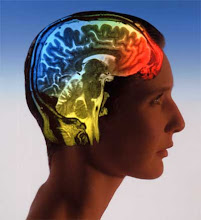
Good article from 'Psychology Today' - you can follow them on Facebook if you like this sort of thing:
Procrastination: ten things to know
Showing posts with label stress. Show all posts
Showing posts with label stress. Show all posts
Tuesday, 13 July 2010


Thursday, 10 June 2010
The exam 2010
Well I just saw the exam paper and there were a couple of tough ones...
On the positive side, Memory, research methods and atypical behaviour were pretty predictable. I'd even go as far as to say the questions on memory were good!
I think the one on prejudice is one of the harder Qs to answer on this topic, but it was one of your homework questions so hopefully not any great shock to you! Looking at the other social psychology topics, they were tough too.
The worst in my opionion was stress - I wouldn't have expected the 2 questions to be only on fight/flight and transactional model - both smallish areas of the topic. Hope you managed to give a good account of yourselves!
Good luck with the rest of your exams, or if you are finished - congratulations!
Monday, 1 February 2010
Cognitive therapy
A couple of queries about cognitive therapy....
Philosophers such as Hume had suggested that emotions lead to thoughts. Cognitive primacy is an idea dating from the work of Magda Arnold in the 1960s, that it works the other way around: our thoughts come first, and our emotions follow. This was influential on the founders of CBT, Albert Ellis and Aaron Beck. Beck, for example, stated that there are three 'faulty views' which lead to depression: So Beck stated that 3 beliefs cause depression and therefore that thoughts come first, and emotion follows after. This 'cognitive triad' includes negative views of the self, negative views of the world and negative views of the future.
For example, a person fails an exam:
Negative view of self - "I'm a failure"
Negative view of the world - "Everyone is against me"
Negative view of the future - "I'll never be good at anything"
It is worth noting that this viewpoint links to theories of stress: Magda Arnold founded Appraisal Theory (http://en.wikipedia.org/wiki/Appraisal_theory) which influenced Lazarus and Folkman's 'Transactional Model of Stress' (1984). The first two stages of this are are the appraisals of the stressor and the self. So again, thought processes are seen to come first, and emotions and behaviour (in this case stress) afterwards.
In reality it is not quite so simple... Schachter & Singer (1962) found that people assess their own emotional state in part by observing their own physiological state, e.g. by how fast their heart is beating. So the interaction between emotions, thoughts and physical states is complex and probably not one-way.
Philosophers such as Hume had suggested that emotions lead to thoughts. Cognitive primacy is an idea dating from the work of Magda Arnold in the 1960s, that it works the other way around: our thoughts come first, and our emotions follow. This was influential on the founders of CBT, Albert Ellis and Aaron Beck. Beck, for example, stated that there are three 'faulty views' which lead to depression:
So Beck stated that 3 beliefs cause depression and therefore that thoughts come first, and emotion follows after. This 'cognitive triad' includes negative views of the self, negative views of the world and negative views of the future.For example, a person fails an exam:
Negative view of self - "I'm a failure"
Negative view of the world - "Everyone is against me"
Negative view of the future - "I'll never be good at anything"
It is worth noting that this viewpoint links to theories of stress: Magda Arnold founded Appraisal Theory (http://en.wikipedia.org/wiki/Appraisal_theory) which influenced Lazarus and Folkman's 'Transactional Model of Stress' (1984). The first two stages of this are are the appraisals of the stressor and the self. So again, thought processes are seen to come first, and emotions and behaviour (in this case stress) afterwards.
In reality it is not quite so simple... Schachter & Singer (1962) found that people assess their own emotional state in part by observing their own physiological state, e.g. by how fast their heart is beating. So the interaction between emotions, thoughts and physical states is complex and probably not one-way.
Thursday, 4 June 2009
A couple of issues
A couple of issues that have come up in late NABs, prelims etc:
- Conditions of the IV. Don't get this mixed up with extraneous variables. An IV has two or more values. For example with a memory test, the IV could be sitting it with or without music as a distraction. When participants are then tested, there are two experimental 'conditions'. So the two 'conditions of the IV' in this example would be 1) Memory test with music and 2) memory test without music.
- Effects of stress. People tend to produce good examples of physical effects, but neglect mental health effects e.g. irritable, unable to sleep, anger, memory loss, paranoia. Long term: greater liklihood of developing major psychological disorder e.g. depression, anorexia.
- Random sampling - this means that everyone in the population has the same chance of being chosen. A list of names and random numbers can be used, or with a small sample, pulling names from a hat is also random. Picking people off the street or corridor is not random, as you will get a biased sample, with certain people more likely to be chosen. Take these toy soldiers for example:

Monday, 27 April 2009
Transactional Model
Introduction
One of the most important theories in stress research today, the 'transactional model' (or 'approach') is important because it takes account of cognitive factors in stress. It is primarily the work of Lazarus and Folkman (1984).
General points
The GAS can be described as a a physiological model of stress, as it focusses on what happens inside the body - the outcomes of stress. The approach of Holmes and Rahe (1967) focusses on the stressors themselves - how they add up to make an individual stressed and ill. The transactional model is different because it focusses on the thought processes of individuals, such as how they view a stressor, and how they view themselves.
The details
The model proposes that a two part mental evaluation of a stressor occurs. This involves:
- Primary appraisal: assessing the stressor to judge how much of a threat it is.
- Secondary appraisal: assessing one's own ability to cope with the stressor. For example, does the person feel up for the challenge, or do they feel tired and overwhelmed?
Once these processes are complete, the person proceeds to tackle the stressor, and the outcome (good or bad) follows.
Evaluation
The transactional model is more realistic that some older models, in that it allows for different people to react to the same stressor in different ways. It can explain why some people find exams stressful, and others don't. Unlike the GAS, the research has been done on humans. It us a current theory which is proving very useful for research.
A negative side of the theory is that it assumes that people are rational in their thought processes, which may not always be true.
The 'GAS'
Introduction
One of the main theories in the area of stress, the 'General Adaptation Syndrome' or 'GAS' is based on the work of Hans Selye and colleagues. It presents the idea that a person proceeds through a series of stages as they fight stress.
Key Ideas
The GAS suggests that all animals including humans react to all stressors in a similar way. The response to stressors is presented as a 'syndrome', a medical term for a group of symptoms that appear together.
The details
The reaction to stress is presented as adaptation or resistance, for Selye believed that this is an important part of how the body fights stressors, including illness. Not all stressors will cause the full range of stages to be experienced, but if they are, then the person progresses throught three main stages:
- Alarm: the body's reactions and heightened and a 'fight or flight' reaction is experienced. The body releases adrenalin and glucose enters the bloodstream. Symptoms include sweating, a raised heart rate. Internally, the adrenal glands enlarge, and stomach ulcers may be present. The immune system is damaged, with a shrinking of the lymph (white blood cell) system.
- Resistance: if the stressor persists, the body adapts to find some way of coping. Stress hormones such as cortisol are released, and the body obtains energy by burning fats. Even though the stressor is still present, symptoms from the alarm stage disappear.
- Exhaustion: if the stress is prolonged for weeks without being overcome, the body may become
exhausted. Symptoms from the first stage reappear. Ultimately this results in 'diseases of adaptation' such as heart disease, and psychological problems such as depression are also likely.
Evaluation
The GAS is a thorough biological theory of stress, based on a large body of experimental evidence. However, a lot of the research has been done on animals (especially rats and birds), making it harder to apply to humans. The theory is based on sound knowledge of biological systems. However, it does not always take account of psychological factors. The idea that all organisms react to all stressors in the same way is certainly an oversimplification.
Monday, 9 February 2009
Stress research
It seems that the stress RI topic is posing the most problems in terms of finding suitable background research for your write-ups.
Some general comments:
1) It is hard to find stuff specifically on things like GSR (skin conductivity) and heart rate because these tend to be viewed as primarily biology rather than psychology. However, most psychology books will contain an overview of how the stress response works on a biological level.
4) The SQA handout only has referenced to studies by Selye, but this in itself should give you a clue to what is expected. If anyone wants to look at Selye's book 'The Stress of Life' (1956) I have a copy, it is an easy read and you could probably find a good quote or two.
5) A lot of the research that I have found on the internet is very applied, i.e. it concerns using the concepts for practical purposes. This is ok, and in fact I think it would be very good if you worked in some applications of your research, perhaps towards the end of your intro and again in the discussion section.
Some general comments:
1) It is hard to find stuff specifically on things like GSR (skin conductivity) and heart rate because these tend to be viewed as primarily biology rather than psychology. However, most psychology books will contain an overview of how the stress response works on a biological level.
2) Health psychology has a strong crossover with these areas, but do not put too many of these studies in if not directly relevant. For example, you are not studying immune function, so go easy on that. If you are looking at heart rate, studies like the Friedman and Rosenman (1974) study of heart disease could be used.
3) I have tended to warn against including stress reduction stuff. However, there are exceptions - some stress reduction studies are closely linked with your research. For example, the technique of biofeedback uses measures such as GSR and heart rate in an attempt to teach people to relax.
4) The SQA handout only has referenced to studies by Selye, but this in itself should give you a clue to what is expected. If anyone wants to look at Selye's book 'The Stress of Life' (1956) I have a copy, it is an easy read and you could probably find a good quote or two.
5) A lot of the research that I have found on the internet is very applied, i.e. it concerns using the concepts for practical purposes. This is ok, and in fact I think it would be very good if you worked in some applications of your research, perhaps towards the end of your intro and again in the discussion section.
Monday, 26 January 2009
Couple of links
Here are a couple of revision-related links:
Mini-articles from the BBC website on memory techniques - simplistic but useful, and the discussion comments are interesting.
http://www.bbc.co.uk/radio4/memory/improve/no_mistakes.shtml
A short video about stress from the same site (there's also a transcript):
Mini-articles from the BBC website on memory techniques - simplistic but useful, and the discussion comments are interesting.
http://www.bbc.co.uk/radio4/memory/improve/no_mistakes.shtml
A short video about stress from the same site (there's also a transcript):
Monday, 19 January 2009
Stress article
Good article on stress in the Psychology Review magazine, which you can find in the stand in the library, outside the computer room (FLS).
It focusses on biological aspects - a follow-up on psychological theiries and stress reduction is due to be in the next issue.

It focusses on biological aspects - a follow-up on psychological theiries and stress reduction is due to be in the next issue.
Monday, 2 June 2008
Culture
'Cultural factors' is a term that appears in many topics, and I thought it could use a bit of explanation.
Most psychological research is done in North America and Europe, and theories are sometimes criticised for this - do the conclusions apply to other cultures around the world?
It used to be the case that in the unit 1 topics, you could get a tricky little 4 or 6-mark question on culture. However, the new format seems to make that less likely - I can't see a ten mark question on this coming up.
However, it would still be useful to know at least one piece of info or research for each topic that will allow you to show an awareness of cross-cultural issues. This will help you pick up extra marks, especially A&E marks, and give that 'WOW' factor to the examiner by knowing things that most candidates don't know!
Here are some possibilities:
Memory: a lot of our long-term memories form culture-based bundles of knowledge called schemas. Bartlett (1932) showed how people tend to distort info from other cultures. Any good theory of LTM must take culture into account.
Early Socialisation: Morelli & Tronick (1992) gave evidence that 'stages of attachment' apply to an African hunter-gatherer tribe, despite differences in child-rearing. A strength of Ainsworth's theory of attachment types (secure, avoidant, resistant) is that she studied Ugandan children as well as American.
Stress: Social support is one of the strategies for reducing stress. Kim & McKenry (1998) studied social support in the USA, and found that ethnic minorities (e.g. black, hispanic) tended to have better support from their parents/children than the white majority.
Intelligence: The main issue to be aware of is cultural bias in IQ testing. Gould (1982) disputed evidence of racial differences in IQ, as cultural background and knowledge of English were confounding variables.
Most psychological research is done in North America and Europe, and theories are sometimes criticised for this - do the conclusions apply to other cultures around the world?
It used to be the case that in the unit 1 topics, you could get a tricky little 4 or 6-mark question on culture. However, the new format seems to make that less likely - I can't see a ten mark question on this coming up.
However, it would still be useful to know at least one piece of info or research for each topic that will allow you to show an awareness of cross-cultural issues. This will help you pick up extra marks, especially A&E marks, and give that 'WOW' factor to the examiner by knowing things that most candidates don't know!
Here are some possibilities:
Memory: a lot of our long-term memories form culture-based bundles of knowledge called schemas. Bartlett (1932) showed how people tend to distort info from other cultures. Any good theory of LTM must take culture into account.
Early Socialisation: Morelli & Tronick (1992) gave evidence that 'stages of attachment' apply to an African hunter-gatherer tribe, despite differences in child-rearing. A strength of Ainsworth's theory of attachment types (secure, avoidant, resistant) is that she studied Ugandan children as well as American.
Stress: Social support is one of the strategies for reducing stress. Kim & McKenry (1998) studied social support in the USA, and found that ethnic minorities (e.g. black, hispanic) tended to have better support from their parents/children than the white majority.
Conf & Obed: There have been various cross-cultural studies based on the Asch and Milgram paradigms. Smith & Bond (1998) looked at 31 studies of conformity, and found that people from 'collectivist' cultures (primarily African and Asian countries) tended to show higher levels of conformity than people from 'individualist' cultures (e.g. North America, Western Europe).
Intelligence: The main issue to be aware of is cultural bias in IQ testing. Gould (1982) disputed evidence of racial differences in IQ, as cultural background and knowledge of English were confounding variables.
Subscribe to:
Posts (Atom)