Monday, 19 January 2009

HM is dead

Some papers and magazines recently included an obituary of H.M., the memory-loss patient who died last month.

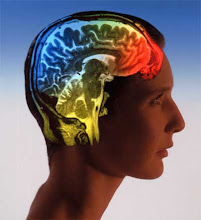
In 1953, H.M. had an operation which aimed to reduce the frequency of his epileptic seizures. This included removal of a structure known as the hippocampus on both sides of his brain.

The result was that from then and for the rest of his life, H.M. has severe anterograde amnesia - he was unable to encode any new episodic or semantic memories, causing him to 'live in the past'. He was able to encode new procedural memories, however, and his working memory was intact too.

His case, although tragic, was hugely important in helping psychologists to locate memory functions, which had previously thought to be distributed throughout the brain.


Stress article

Good article on stress in the Psychology Review magazine, which you can find in the stand in the library, outside the computer room (FLS).

It focusses on biological aspects - a follow-up on psychological theiries and stress reduction is due to be in the next issue.


RI update

Since my last post back in October, most of you are well underway with the final RI now.

Some of you completed the practice RI, some didn't; if you did then hopefully it was enjoyable and useful practice, but either way it is time to move on!

Things to be thinking about:
  • If you have not already gathered your RI data, this is your top priority. Of course, you can't start until you have prepared all task meterials, consent forms, instructions etc, but this should not take long, especially if you split these jobs among your group.
  • Background research. The introduction section of your write-up needs to show a good, broad knowledge of background research, so get reading!
  • Analyse the data. Strictly speaking, this should be done individually. As you are all doing experiments, it should be quite easy - mean, mode, median, range and standard deviation for each condition, plus a graph, probably comparing the means.
  • When the above tasks are done, you should be able to write up your first draft quite easily. This is due in after the February week, but I'm willing to look over your work sooner if you wish.
I can't emphasise enough how important it is to keep on top of the RI and not be rushing at the last minute. I will post more suggestions for your write-ups in due course.

Friday, 10 October 2008

Research Investigation

A few of you have been asking about the Research Investigation (or 'RI'). This is a task which we will start in December and will be completed some time in March. It will involve you running an experiment in a group, and then writing an extended lab report individually. These reports are submitted to the SQA, and count for 20% of your overall grade in the course.

The topics are set by the SQA, though the details of how the experiments are carried out are up to you. I like this year's topics - one is on the use of images to help with memory, and the other is on the effects of a 'stressor' on a bodily response such as heart rate. Both should be pretty straightforward to carry out and write up. Usually students find this part of the course enjoyable, so I hope it will be again this year.

Friday, 3 October 2008

Past Papers; textbooks

Some of you have been asking about Past Papers. I'm sorry to have to tell you that Psychology past papers are currently not published, despite it being a larger Higher than some other subjects that are. To look on the bright side, we can photocopy them for you in the school, and save you £7.50.
As for textbooks, please do your best to get hold of a textbook, preferably 'Higher Psychology', the one on your S6 reading list. I am going to put a few more copies into the library, but it will be easiest for you if you can get a copy to use for homework and revision. I have no doubt that you will be able to sell it on at the end of the year. Apparently it is not available in Borders at the moment, but it is available from John Smith's and Amazon.

Working Memory

I know that the Working Memory model can be hard to understand - here is a quick run through of the key points. I am also going to email you a sample essay answer on the models of memory.

1) The model was proposed by Baddeley and Hitch in 1974
2) It is an alternative view of STM, which emphasises active processing (i.e. it doesn't see STM as a passive store of info).
3) WM is the part of our mind that we use for day-to-day tasks and problem solving
4) WM can achieve more than one task at once
5) The Central Executive is a system based on attention, and how your attention can be divided between tasks. It controls the other parts, which are known as 'slave systems'.
6) The Central Executive is modality-free, has a limited capacity, and is necessary for creative and non-routine processes.
7) Sound and language are mainly processed in the Phonological Loop, which has two parts...
8) The Articulatory Process or 'Inner Voice' is responsible for rehearsing words or numbers inside your head. It has a capacity of around two seconds. The Phonological Store is sometimes called the 'Inner Ear'.
9) The Visuo-spatial Sketchpad does routine visual processing, but is less well-researched. It is sometimes known as the 'Inner Eye'.
10) Recently, a new slave system, the Episodic Buffer, has been proposed. This is similar to Episodic LTM, except that it is temporary.

IRP again; memory

Hi all,

We're well underway with the topic of memory now - nearly finished it in fact. Well done on all the hard work, good homework tasks and practical work too. Next week we'll be looking at the last sub-topic, memory improvement strategies and mnemonics, which is always good fun.

I had mentioned before that your presentation topics could make IRP topics. It is worth noting that a topic such as 'schizophrenia' would lend itself to purely reading-based type of research. In contrast, some of the memory tasks we have done recently might give you an idea of how you could do an IRP based around a psychology experiment.

If you have a vague idea of something you'd like to do along these lines but haven't yet got a specific topic, why not email me about it.